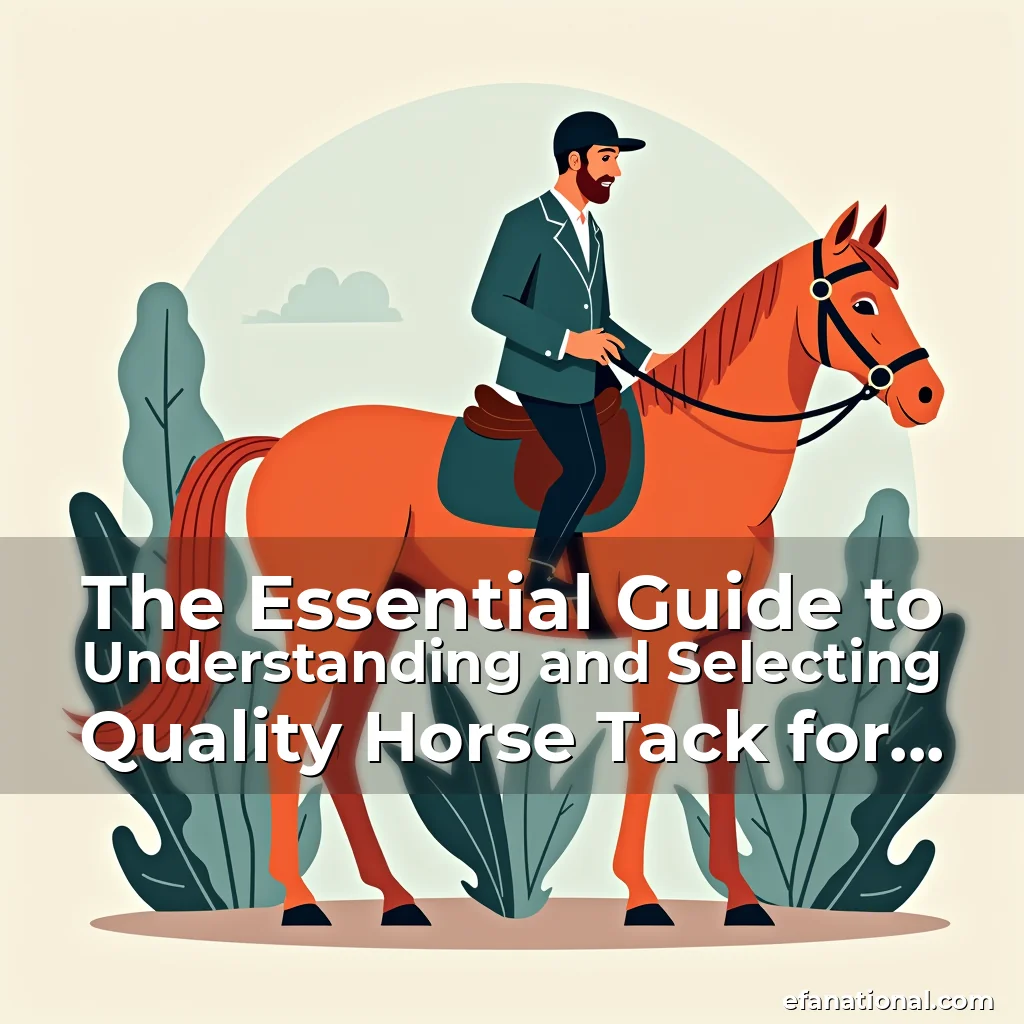
The Essential Guide to Understanding and Selecting Quality Horse Tack for Discerning Equestrians
Horse tack is an essential component of any successful equine partnership, encompassing the equipment used to ride, control, and care for horses. From saddles that provide comfort during long rides to bridles that ensure clear communication between rider and horse, each piece plays a critical role in safety and performance.
Selecting high-quality horse tack is not only about aesthetics but also about functionality, durability, and fit. Whether you’re a seasoned competitor or a new enthusiast, understanding the intricacies of horse tack can significantly enhance your riding experience and build trust with your equine partner.
The Foundation of Horse Tack: Saddles, Bridles, and Stirrups
A saddle serves as the primary interface between rider and horse, distributing weight evenly across the animal’s back and providing stability. The design of a saddle varies depending on the discipline—English, Western, or specialized sports such as jumping or dressage.
Proper saddle fit is crucial; ill-fitting saddles can cause discomfort, soreness, or even injury to the horse over time. A well-fitted saddle ensures both rider security and horse welfare by maintaining correct pressure points and balance.
- Saddles: English saddles are typically lighter with flatter seats, suitable for disciplines requiring close contact with the horse, whereas Western saddles have deeper seats and greater support for trail riding or ranch work.
- Bridles: These include bits, reins, and headstalls designed to guide the horse through subtle cues from the rider’s hands, varying based on training level and desired responsiveness.
Stirrups complete the riding ensemble by offering foot placement and balance. They come in various materials, including leather, aluminum, and synthetic composites, each with distinct advantages regarding grip, weight, and maintenance requirements.
Bits and Bridling Systems: Communication at Its Core
The bit is the most direct means of communication between rider and horse within the bridle system. It rests in the horse’s mouth and transmits signals via pressure applied by the rider’s hands on the reins.
Different types of bits exert varying degrees of pressure and influence different parts of the horse’s mouth—such as the bars, tongue, or palate—to achieve desired responses without causing undue stress or pain when used correctly.
Choosing the right bit depends heavily on the horse’s sensitivity, training stage, and individual preferences. For instance, snaffle bits apply direct pres
Understanding Bit Materials and Their Impact
Metal bits are commonly made from stainless steel or copper alloys, which can affect salivation levels due to their taste properties. Rubber-coated or plastic bits reduce metal-to-mouth contact, potentially increasing comfort for sensitive mouths.
Regular inspection of the bit for wear and tear is vital since damaged bits may malfunction or become hazardous. Ensuring smooth movement and absence of sharp edges prevents unnecessary irritation inside the horse’s mouth.
Care and Maintenance of Horse Tack: Preserving Performance and Longevity
Proper upkeep of horse tack extends its lifespan and maintains optimal function. Regular cleaning after use removes sweat, dirt, and oils that could degrade leather quality or compromise hardware integrity.
Leather conditioning is especially important to prevent cracking and drying out, particularly in regions with extreme climates where humidity fluctuates drastically. Using appropriate conditioners tailored for equestrian gear helps maintain supple yet durable surfaces.
Hardware components like buckles, girth straps, and stirrup leathers need periodic checks for rust, corrosion, or loosening nuts and bolts. Tightening loose fittings promptly avoids potential failures mid-ride which might endanger both horse and rider.
Storage conditions play a significant role too; keeping tack away from direct sunlight reduces fading and degradation caused by UV exposure. Hanging items properly allows airflow preventing mold growth and musty odors that attract pests over time.
Riding Boots and Protective Gear: Enhancing Safety and Comfort
Riding boots serve dual purposes—they protect the rider’s legs against chafing from the saddle flap while also aiding in secure leg positioning during mounted activities. Styles range from tall boots intended for show jumping to shorter versions preferred for hacking or casual rides.
Materials vary widely among riding boots with options available in full-grain leather known for durability versus synthetic alternatives that prioritize breathability and ease-of-care features. Choosing boot styles compatible with the type of riding undertaken enhances overall effectiveness.
Additional protective gear includes body protectors worn under riding jackets to cushion falls and impact injuries. Helmets remain non-negotiable safety equipment regardless of skill level or riding environment, reducing risk associated with head trauma significantly.
Gloves specifically designed for equestrian use improve grip on reins and add protection against blisters or abrasions incurred during prolonged sessions atop a galloping steed.
Tack Accessories: Small Items That Make Big Differences
While larger pieces dominate attention, numerous accessories contribute substantially towards enhancing both rider experience and horse wellbeing. These small tools often go unnoticed despite playing pivotal roles in daily routines involving equines.
Lead ropes facilitate handling young horses safely while teaching basic commands before transitioning onto more complex systems like bridles and halters. They’re indispensable for groundwork exercises aimed at building trust and obedience gradually.
Knee pads assist in stabilizing movements around a moving horse, whether leading or performing tasks near ground level. Similarly, martingales help manage certain behaviors by limiting excessive head movements that might interfere with effective rein aids.
Lunge lines enable trainers to teach horses fundamental skills remotely using circles created around them rather than being physically astride the animal itself—an invaluable technique for shaping behavior early stages of development.
Eco-Friendly and Ethical Considerations in Modern Horse Tack Production
In recent years, there has been growing awareness surrounding environmental sustainability issues affecting industries worldwide—including those related to producing traditional forms of equestrian equipment. This shift encourages manufacturers toward developing greener products aligned with ethical practices promoting animal welfare concerns simultaneously.
Organic leathers derived from responsibly managed sources minimize ecological footprint compared conventional tanning processes known for releasing harmful chemicals into ecosystems. Additionally, utilizing recycled plastics or other biodegradable substances contributes positively toward waste management strategies globally.
Supporting companies committed transparently disclosing sourcing methods enables consumers make informed choices contributing indirectly conservation efforts protecting natural resources consumed manufacturing sectors traditionally less environmentally conscious ones.
Furthermore, opting cruelty-free alternatives whenever feasible reinforces compassionate values ensuring neither animals nor environments suffer consequences arising industrial production cycles impacting broader communities beyond immediate stakeholders involved creation distribution phases respective goods/services offered marketplaces today.
Customization Options for Personalized Fit and Style Preferences
Modern advancements allow customization possibilities extending beyond standard offerings found mainstream retailers catering diverse tastes expectations individuals preferring bespoke solutions matching unique needs characteristics possessed particular users engaged recreational competitive aspects equitation field alike.
Adjustable features built-in designs permit fine-tuning dimensions accommodating variations physique size stature between human participants interacting regularly mounts utilized services rendered throughout duration active involvement pursuits passion equestrianism personally professionally oriented contexts respectively.
Premium brands frequently collaborate artisans skilled crafting intricate detailing reflecting cultural heritage regional traditions celebrated internationally recognized events competitions showcasing talents craftsmanship honed generations passed down lineages dedicated preserving legacy excellence achieved historically significant milestones attained milestones notable figures industry legends revered status amongst peers enthusiasts alike.
This personalized approach fosters stronger connections formed through shared experiences cultivated relationships nurtured consistently maintained respect mutual understanding developed enduring bonds transcending mere transactional interactions limited scope typical exchanges occurring ordinary marketplace transactions commonplace everyday life modern society currently prevalent everywhere planet Earth inhabited mankind collectively.
Conclusion
From foundational elements like saddles to minor yet impactful accessories, every aspect of horse tack requires thoughtful consideration regarding suitability purpose intended usage scenarios encountered routinely amidst dynamic nature equine companionship endeavors pursued passionately relentlessly across globe wherever people find joy freedom expression through interaction majestic creatures embody spirit adventure exploration intrinsic qualities inherent beings possessing remarkable intelligence capacity forming profound emotional attachments capable sustaining lifelong friendships exceeding boundaries species divisions existing world today.
By prioritizing quality selection meticulous maintenance ongoing education continual improvement techniques employed managing partnerships forged together humans four-legged friends, we honor commitments made entering realms governed unwritten codes ethics responsibility stewardship required nurturing harmonious coexistence thriving ecosystem composed living entities sharing space terrestrial sphere earth home humanity shares existence alongside countless others relying upon same precious resource planet Earth provides sustenance survival continuation lineage future descendants yet unborn.