
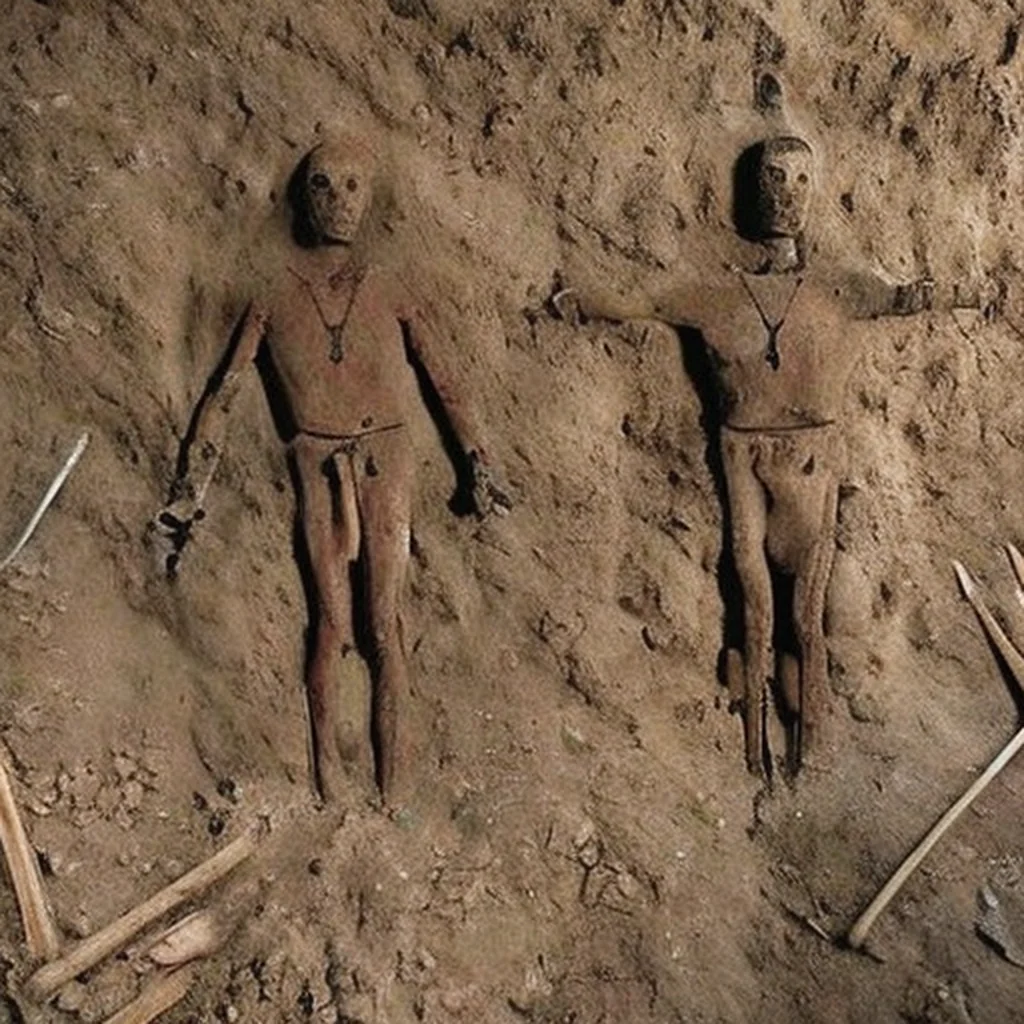
This survey, conducted by the Institute of Archaeology of the Russian Academy of Sciences, has provided invaluable insights into the burial practices of the early medieval period, offering a glimpse into the lives and beliefs of the people who lived in this region. The survey revealed a complex network of burial mounds, ditches, and other features, indicating a sophisticated burial system. The necropolis is characterized by a high density of burials, with an average of 10 burials per hectare. This density suggests a strong sense of community and shared beliefs among the early medieval people.
This grave, located in the same area as Grave 1, is believed to belong to a warrior, and the presence of the horse’s remains suggests a deep connection between the warrior and his mount. The warrior’s remains were found in a crouched position, suggesting a defensive posture. His skeletal structure is remarkably well-preserved, indicating a healthy lifestyle and a strong constitution.
The discovery of a trove of artifacts from the 12th century in Suzdal, Russia, offers a fascinating glimpse into the lives and customs of the people who lived there centuries ago. These unearthed treasures, including a battle axe, stirrups, and a lock, provide valuable insights into the military, social, and technological advancements of the time. The most striking artifact is the battle axe, a formidable weapon of its era. Its robust construction and sharp edge suggest its use in combat, potentially indicating the presence of a strong military force in the burial ground.